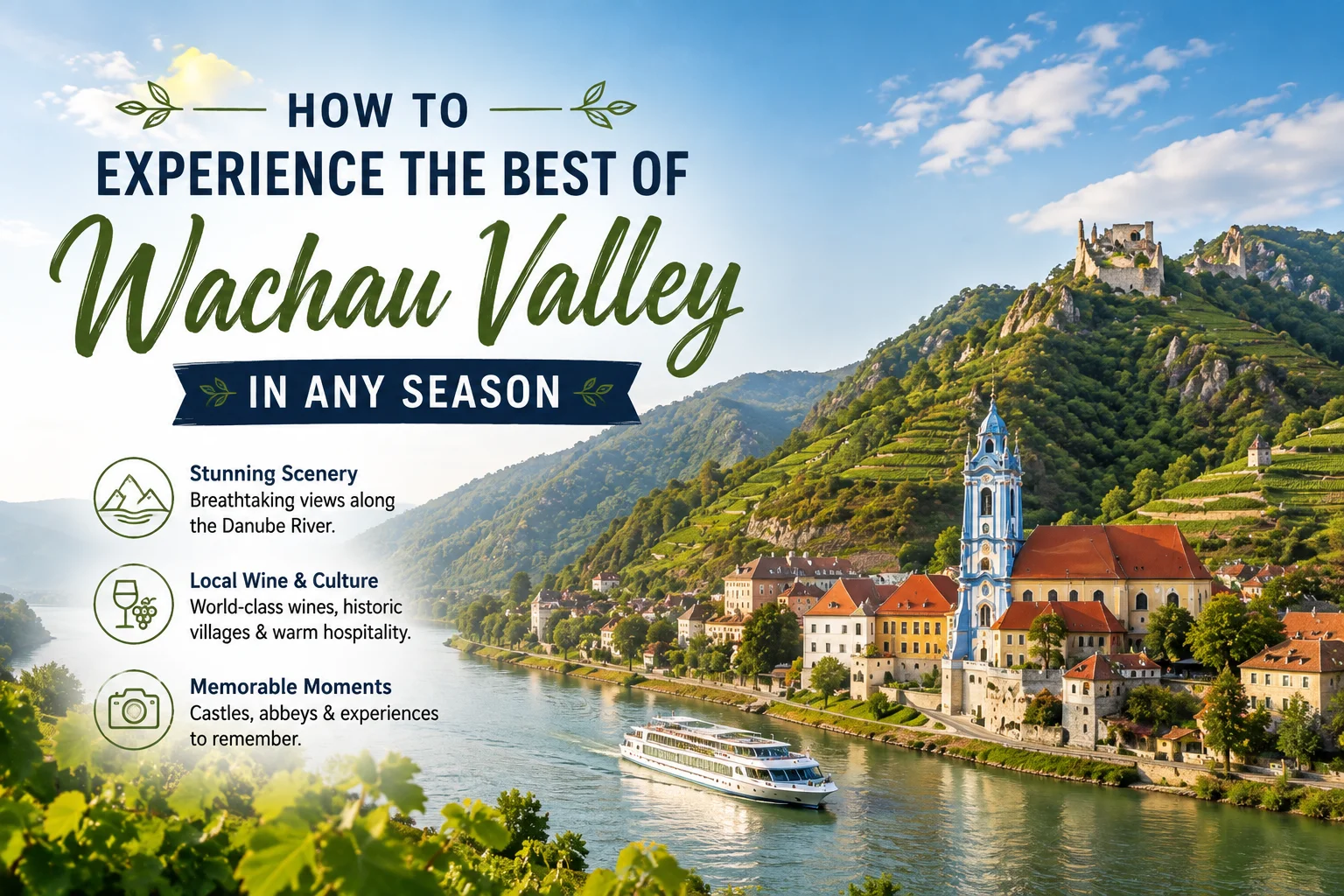
Planning the Ultimate Day Trip from Vienna to Wachau Valley
Crafting a seamless Wachau Valley Day Trip requires smart route optimization. The ideal day trip from Vienna to Wachau Valley follows a linear route roughly 80 to 90 kilometers west of the capital: travel directly to Melk Abbey in the morning, then journey eastward along the Danube River through Spitz, Weißenkirchen, Dürnstein, and Krems before returning in the evening.
Navigating multiple destinations across this 36-kilometer valley with tight schedules requires careful transport planning. Standard metered city taxis often hesitate to quote upfront rates for out-of-town, full-day journeys or add significant waiting fees while you tour monasteries and sample wine. In contrast, reserving fixed-price private vehicle services gives you full route flexibility, clear budgeting, and direct hotel pick-up.
| Travel Mode | Door-to-Door Duration | Flexibility | Scenic & Comfort Value | Cost Overview |
|---|---|---|---|---|
| Private Chauffeur Transfer | ~8–9 hours total | Maximum (Custom stops, door-to-door, luggage safe) | High (Luxury Mercedes sedan/van, panoramic valley drive) | Fixed-price group quote (Transparent, no hidden waiting fees) |
| Standard Metered City Taxi | ~8–10 hours total | Moderate (Subject to driver availability & city limits) | Moderate (Standard sedan, driver might not know wine routes) | High & variable (Metered rates, heavy out-of-zone & waiting fees) |
| Organized Coach Tour | ~9–10 hours total | Low (Fixed timetable, rigid group itinerary) | Moderate (Shared bus, preset sights, tight time limits) | €100–€199 per seat |
| Self-Drive Rental Car | ~9–11 hours total | High (Self-guided navigation & parking searches) | Moderate (Driver cannot participate in wine tastings) | €60–€120 rental/fuel + parking (Strict 0.05% BAC limit) |
How to Route Your Day Trip from Vienna to Wachau Valley
The best way to experience the valley without backtracking is to travel from Vienna directly west to Melk via the A1 autobahn, spend the morning there, and then follow the scenic B3 highway eastbound through Spitz, Weißenkirchen, Dürnstein, and Krems before returning home.
Opting for our premium chauffeur service guarantees a stress-free transition between these stops. Rather than worrying about strict regional bus timetables or navigating village parking restrictions in pedestrian zones, your dedicated driver picks you up right at your doorstep, manages vehicle logistics while you tour, and meets you at designated points downriver.
Step-by-Step Classic One-Day Wachau Itinerary: Melk, Dürnstein, and Krems
To maximize your 8 to 10-hour day, follow this classic non-backtracking flow:
- 08:30 – Depart Vienna: Enjoy a smooth, 1-hour private drive through the Lower Austrian countryside directly to the gates of Melk Abbey.
- 09:45 to 12:00 – Melk Abbey: Dedicate roughly two hours to exploring the abbey’s Marble Hall, library, Baroque church, and manicured terrace gardens.
- 12:15 to 13:45 – Downstream Cruise or River Drive: Board a scheduled downstream Danube boat from Melk to Dürnstein, or take a scenic drive along the riverbank past cliffside fortifications.
- 14:00 to 16:00 – Dürnstein Village & Castle Hike: Stroll through medieval cobblestone lanes, view the distinctive blue church tower, and take a 30-minute hike up to the Richard the Lionheart fortress ruins.
- 16:15 to 17:30 – Wine Tasting in Weißenkirchen or Spitz: Stop at a traditional vintner or hillside tavern for a guided flight of Grüner Veltliner and Wachau Riesling paired with local cold platters.
- 17:45 to 18:30 – Krems an der Donau: Walk beneath the medieval Steiner Tor gate in Krems before your evening transfer back to Vienna.
- 19:30 – Return to Vienna: Arrive back at your hotel in time for dinner.
Top Sights to Explore Along the Danube River
The Wachau was designated a UNESCO World Heritage Cultural Landscape in 2000, honoring over a millennium of architecture, viticulture, and riverside history.
Melk Abbey: Baroque Architecture, Library, and Gardens
Towering high on a rocky bluff above the Danube, Melk Abbey stands as one of Europe’s finest Benedictine Baroque monasteries. Monks of the Order of Saint Benedict have lived and worked here continuously for over 900 years.
Key highlights of your visit include:
- The Marble Hall: A grand ceremonial hall featuring detailed ceiling frescoes painted by Paul Troger and walls finished in lustrous stucco marble.
- The Abbey Library: Housing more than 100,000 historic volumes, ancient manuscripts, and a famous spiral staircase leading directly to the church gallery.
- The Abbey Church: Crowned by an impressive 200-foot-high dome, filled with gilded altars and intricate gold-leaf detailing.
- The Abbey Park & Pavilion: Open seasonally, these peaceful gardens feature an ornate Baroque garden pavilion and panoramic lookouts over the Danube.
Standard self-guided admission costs around €16, while guided tours are approximately €20. For comprehensive planning, check the detailed Wachau Valley Day Trip Guide.
Dürnstein and the Richard the Lionheart Castle Ruins
Dürnstein is often regarded as the most picturesque village along the entire river. Its striking blue and white Baroque church tower at Dürnstein Abbey forms the classic postcard view of the valley.
High above the village sit the ruins of Castle Dürnstein. In late 1192, England's King Richard the Lionheart was captured and held prisoner here by Duke Leopold V following a feud during the Third Crusade. The uphill hike from the village center takes roughly 30 to 40 minutes along a rocky footpath. Sturdy walking shoes are recommended, and the summit rewards you with sweeping views across the river bend and terraced vineyards. Afterward, recharge in the village with authentic Wachauer Marillenknödel (apricot dumplings) or fresh apricot pastries.
Spitz, Weißenkirchen, and Aggstein Castle
Beyond Melk and Dürnstein, the central valley holds several historic gems:
- Spitz an der Donau: Clustered around the base of the Tausendeimerberg ("Thousand-Bucket Hill"), this historic wine-producing village features cobblestone alleys and traditional wine press houses.
- Weißenkirchen in der Wachau: Home to a towering 14th-century fortified Gothic church built to protect villagers from invaders along the Danube.
- Aggstein Castle Ruins: Perched 300 meters above the river on the south bank, this dramatic 12th-century cliffside fortress was once the stronghold of robber barons who held merchant ships to ransom.
- Schönbühel Castle: A privately owned, fairy-tale 12th-century castle sitting directly over the riverbanks near Melk.
Experiencing Wachau Wine Culture and Danube River Cruising
Viticulture in the Wachau dates back to Celtic and Roman times. The region's steep, south-facing stone terraces absorb heat during the day and release it at night, creating optimal conditions for world-class dry white wines.
Vinea Wachau Wine Classifications and Top Vineyards
Wachau white wines—primarily Grüner Veltliner and Riesling—are classified under the regional Vinea Wachau quality framework based on natural ripeness and alcohol levels:
- Steinfeder: Light, fresh, and aromatic wines with a maximum alcohol content of 11.5% ABV, named after the feather grass found on the steep terraces.
- Federspiel: Medium-bodied, elegant wines ranging between 11.5% and 12.5% ABV, named after the falconry term.
- Smaragd: The highest classification, representing rich, full-bodied, complex dry whites with a minimum of 12.5% ABV suitable for extended cellaring. It takes its name from the bright emerald-green lizard that basks on warm vineyard stone walls.
Renowned estates throughout Spitz, Weißenkirchen, and Loiben draw their distinct minerality from primary rock soils composed of gneiss, granite, and amphibolite. If visiting top working cellars, browse the Wachau Wine Route Guide to map your tasting stops.
Navigating the Danube River Cruise Downstream from Melk
A Danube river cruise provides unforgettable perspectives of medieval ruins and terraced hills. Primary passenger operators, such as DDSG Blue Danube, run seasonal scheduled services between April and late October.
Cruising downstream from Melk to Krems takes approximately 1 hour and 45 minutes, whereas traveling upstream against the 6-knot river current takes around 3 hours and 15 minutes. To secure prime photography angles, board early to find seating on the upper sun deck on the port (right-hand downstream) side. Vessels feature onboard dining and local wine service. Read the Wachau Danube cruise guide for up-to-date departure timetables.
Cycling the Donauradweg: South Bank vs. North Bank Routes
For active travelers, cycling a 35-kilometer section of the famous Donauradweg (Danube Cycle Path / EuroVelo 6) between Melk and Krems is a rewarding way to experience the countryside. The ride takes 3 to 5 hours at a leisurely pace:
- The South Bank: Offers dedicated, paved, car-free bike paths through quiet farmland and orchards with excellent vistas of the north bank's castles.
- The North Bank: Passes directly through the famous wine villages (Spitz, Weißenkirchen, Dürnstein), providing easy access to tasting rooms and taverns.
Roll-on passenger and bicycle ferries at Spitz, Weißenkirchen, and Dürnstein allow cyclists to switch riverbanks easily during their ride.
Essential Travel Logistics: Seasons, Packing, and Budgets
Planning your trip around local agricultural seasons unlocks unique cultural highlights, from spring blossoms to autumn wine festivals. To see how the valley shifts throughout the year, read our guide on How to Experience the Best of Wachau Valley in Any Season.
Best Time to Visit for Apricot Blossoms and Grape Harvest
The valley features two standout peak seasons:
- Apricot Blossom (Late April to Mid-May): Around 100,000 apricot trees burst into white and pale pink blossoms across the valley floor, accompanied by mild spring temperatures.
- Summer Harvest (July to August): Warm, sunny weather ideal for open-deck river cruises and sampling ripe Wachau apricots (Marillen).
- Grape Harvest & Foliage (September to October): Terraced vineyards turn vibrant shades of gold and amber. Wineries are active, and local Heurigen serve fresh Sturm (young, partially fermented wine) alongside hearty regional fare.
Danube passenger boats operate strictly from April through late October and shut down during the winter months.
How Much Does a Day Trip from Vienna to Wachau Valley Cost?
A full Wachau day trip from Vienna generally costs between €40 and €90 per person for standard sight admissions, tastings, and dining:
- Melk Abbey Admission: €16 (self-guided) to €20 (guided).
- Danube Cruise Ticket (One-Way): €28 to €40 per adult depending on route length.
- Winery Tastings: €10 to €25 per person at boutique estates.
- Heuriger / Restaurant Lunch: €15 to €35 per person.
When it comes to vehicle transport, opting for standard metered city taxis can quickly run up costs due to ongoing hourly waiting charges and high out-of-district tariffs.
Booking private custom private tours gives your party a fixed-price executive Mercedes vehicle, a dedicated driver for the entire duration, and completely customizable stops without unexpected meter surcharges.
Frequently Asked Questions About Visiting the Wachau Valley
Can I visit the Wachau Valley in winter?
Yes, but with seasonal adjustments. Melk Abbey remains open year-round for interior visits, and historic villages like Dürnstein offer peaceful, uncrowded walks. However, Danube passenger cruise boats do not operate between November and March, vineyard terraces are bare, and many seasonal wine taverns close for the winter.
Is a private transfer better than planning independently?
Yes. Booking a private transfer removes the stress of coordinating tight boat departures, hailing rural taxis between distant wineries, or managing village parking. You travel door-to-door on your own schedule with ample space for purchases and luggage.
How do I purchase admission and Danube boat tickets?
Melk Abbey tickets can be purchased on arrival at the visitor pavilion or online in advance for summer peak slots. Danube boat cruise vouchers can be reserved via operator websites (like DDSG Blue Danube) or at riverside ticket kiosks in Melk, Spitz, and Krems.
Conclusion
A day trip through the Wachau Valley brings together monumental Baroque architecture, historic riverside fortresses, scenic Danube cruising, and world-class wine tasting. By planning a linear downstream route from Melk to Krems, you maximize your sightseeing time while enjoying the best of Lower Austria.
For a completely relaxed, luxurious experience, let TourlyTransfer handle your journey. Our professional chauffeurs provide seamless, door-to-door travel from your Vienna accommodation in premium Mercedes-Benz vehicles, letting you enjoy wine tastings and hillside panoramas at your own pace. Discover our full guide on the Wachau Valley Day Trip from Vienna – How to See Melk, Dürnstein and Krems Without Rushing and book your bespoke private day trip today.