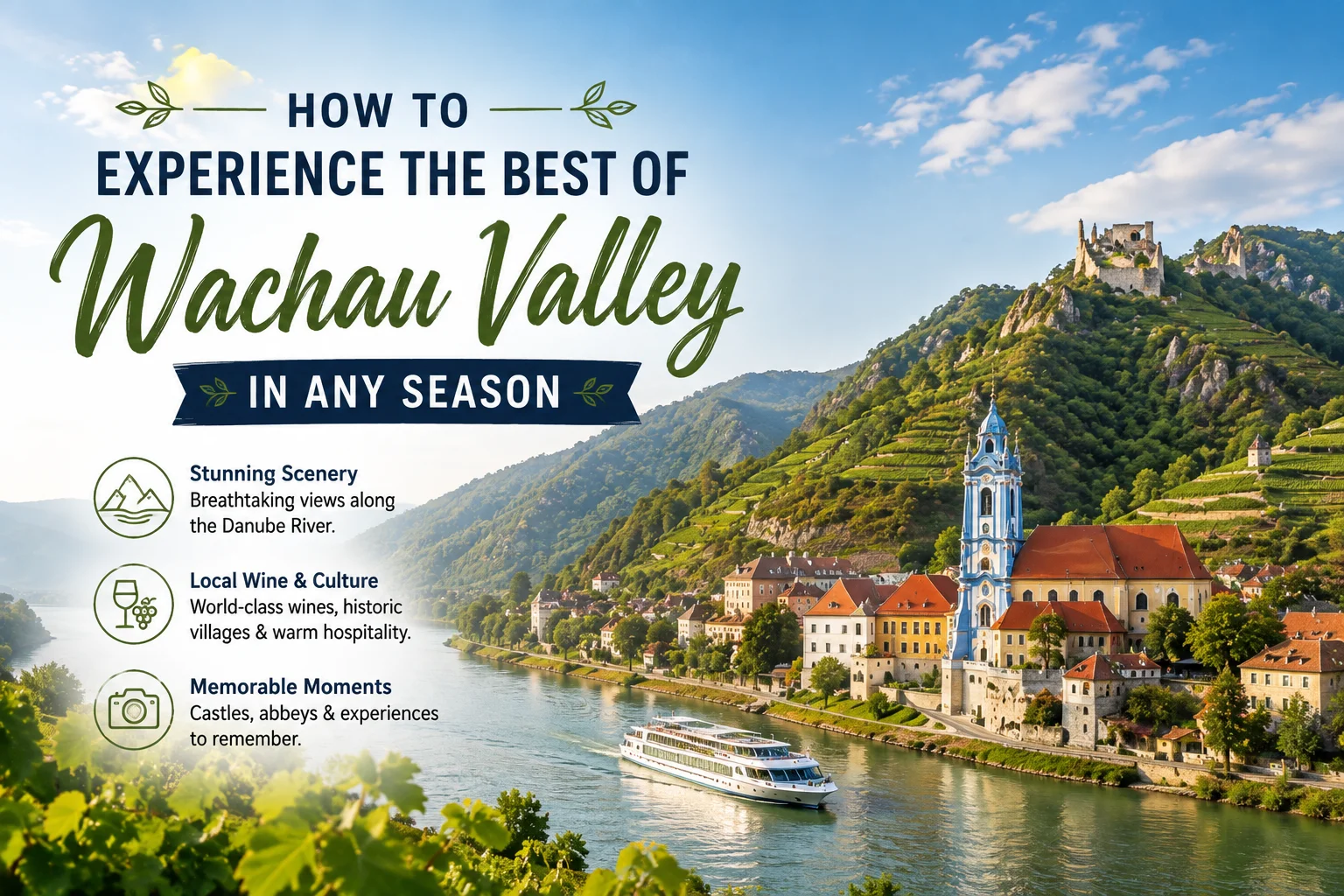
Explore the Wachau Valley Along the Danube
The Wachau Valley is a 36-kilometer stretch of the Danube in Lower Austria, between Melk and Krems, where you can combine Baroque abbeys, medieval castle ruins, vineyard villages, wine tasting, and river views in one trip. It is about 70 kilometers west of Vienna, making it an easy day trip - though an overnight stay gives you more time to enjoy it without rushing.
For a simple first visit, focus on these highlights:
- Start at Melk Abbey, one of Austria's great Baroque landmarks.
- Follow the Danube through Spitz, Weißenkirchen, and Dürnstein for terraced vineyards and local wine.
- Climb to Dürnstein Castle ruins for valley views and the story of Richard the Lionheart.
- Finish in Krems, a historic town with strong rail links back to Vienna.
UNESCO listed the Wachau Cultural Landscape in 2000 because this is more than a pretty river valley. Its stone-walled vineyards, apricot orchards, monasteries, castles, and long-settled towns show how people have shaped the Danube landscape for centuries while keeping much of its historic character intact.
Whether you travel by private car, bike, boat, or train, the Wachau rewards a slower pace - preferably with a glass of local Grüner Veltliner or Riesling along the way.
Discovering the Wachau Valley: Geography, UNESCO Heritage, and Access
Carved out by the Danube River as it cuts through the crystalline rock of the Bohemian Massif, the Wachau encompasses 36 kilometers (22 miles) of dramatic river bends and steep hillsides. The entire core zone of the Wachau Cultural Landscape - UNESCO World Heritage Centre spans 18,387 hectares, surrounded by a protective buffer zone of 2,942 hectares. Sitting at an altitude of roughly 200 meters above sea level, the valley boasts an astonishing concentration of history, containing over 5,000 officially registered historic monuments.
Beyond its stone architecture, the corridor is guarded by European ecological frameworks like Natura 2000 and the European Diploma of Protected Areas. Modern infrastructure blends thoughtfully into this protected setting. Road connections like the B3 highway trace the northern riverbank, while the Westbahn railway lines connect the gateway hubs on either end.
For travelers who prefer direct, stress-free transfers without managing train schedules or luggage between stations, our Wachau Valley Day Trip provides private door-to-door transportation tailored around your schedule. Within the valley itself, there are no road bridges crossing the Danube between Melk and Krems; local vehicle and passenger roll-on ferries at Spitz, Weißenkirchen, and Dürnstein keep traffic peaceful while offering scenic water crossings.
Geological Roots and Cultural Landscape Evolution
The story of human settlement here stretches deep into the prehistoric past. Early humans hunted in the valley during the Paleolithic era, leaving behind world-renowned treasures. Real transformation of the riverbanks began around 800 AD, when powerful Bavarian and Salzburg monasteries began constructing steep, stone-walled vine terraces directly onto the granite hillsides.
These drystone walls—built without mortar—prevent erosion on slopes tilted up to 45 degrees, capturing solar heat during the day and radiating it back onto the vines at night. During the Middle Ages, the ruling Babenberg dynasty fortified the waterway, turning the river into a defended trade corridor.
The valley enjoys an extraordinary microclimate created where the Atlantic oceanic currents meet the dry, warm air of the eastern Pannonian plains. The surrounding Dunkelsteiner forest to the south and Bohemian uplands to the north shield the river gorge from severe northern cold snaps, creating ideal terroir for fruit and wine.
Getting to the River Valley from Vienna
Situated about 70 kilometers west of Vienna, the Wachau is straightforward to reach:
- By Train: Regional ÖBB trains depart regularly from Wien Westbahnhof to Melk (taking about 1 hour) and from Wien Franz-Josefs-Bahnhof to Krems an der Donau (roughly 1 hour and 10 minutes).
- By Car / Highway: Driving via the A1 Autobahn west from Vienna brings you to Melk in around 60 to 75 minutes. Alternatively, taking the S5 highway leads directly into Krems.
- By Scenic Private Transfer: Traveling with a private driver lets you customize stops at hilltop abbeys, secluded vineyards, and riverside villages along the scenic B3 north-bank route without having to navigate unfamiliar roads or regional transit connections.
Historic Monasteries, Medieval Castles, and Riverfront Towns
Wandering through the Wachau feels like stepping into a living chronicle of European architecture. From monumental monasteries perched atop rocky promontories to Gothic parish churches and ruined medieval fortifications, the region preserves its history in vivid detail. As noted in the Austrian National Tourist Office guide to Wachau, the entire corridor showcases an unbroken timeline of cultural craftsmanship. If you are starting your Austrian holiday in the capital, pairing an urban Vienna Sightseeing Tour with a trip out to these Danube landmarks offers the perfect blend of imperial grandeur and countryside charm.
Melk and the Baroque Grandeur of Melk Abbey
Anchoring the western end of the valley, Melk Abbey (Stift Melk) stands as one of the world's most breathtaking Baroque architectural complexes. Continuous home to Benedictine monks for more than 900 years, the current masterpiece was designed by architect Jakob Prandtauer between 1702 and 1736.
Spanning an enormous footprint of 17,500 square meters (188,000 square feet), the abbey features:
- The Marble Hall: A sweeping reception space featuring vibrant ceiling frescoes by Paul Troger. While it looks like solid marble, the walls are actually crafted from polished stucco lustro.
- The Monastic Library: A soaring, two-story sanctuary housing over 100,000 historical volumes, including 750 incunabula (books printed before 1500 CE) and fragments of the medieval Nibelungenlied epic poem.
- The Abbey Church: A dizzying celebration of gold leaf, dramatic frescoes, and a 200-foot-high dome that stands as a peak achievement of High Baroque art.
Historically, Melk was the epicenter of the 15th-century "Melk Reform," an influential movement that revitalized monastic life across Austria and southern Germany.
Dürnstein Castle and Historic Highlights of the Wachau Valley
Further downstream on the north bank sits Dürnstein, instantly recognizable by the bright blue Baroque steeple of its Augustinian monastery church. Perched high on the craggy rocks above the village sit the ruins of Dürnstein Castle (Burgruine Dürnstein).
In December 1192, King Richard the Lionheart of England was captured on his return from the Third Crusade and held prisoner here by Duke Leopold V of Austria. The immense silver ransom paid for the English king's release—amounting to roughly 35,000 kilograms of pure silver—funded the construction of the fortified city walls of Wiener Neustadt. Today, a 20-to-30-minute uphill hike from the village delivers you to the ruins for panoramic views across the Danube bend.
Just west of Spitz lies Willendorf, where railway workers in 1908 uncovered the famous Venus of Willendorf. This 11-centimeter limestone figurine of a female form dates back roughly 25,000 to 29,500 years, making it one of the world's most significant Paleolithic works of art. You can learn about this prehistoric era at the town's dedicated museum, the Venusium.
Spitz, Weißenkirchen, and Göttweig Abbey
- Spitz an der Donau: Clustered around the Tausendeimerberg ("Thousand-Bucket Hill"), named for the vast quantities of wine its steep slopes once produced each harvest. Spitz marks the gateway into the cooler Spitzer Graben side-valley.
- Weißenkirchen in der Wachau: The largest wine-growing municipality in the region, centered around a 14th-century fortified Gothic parish church built to defend local villagers from Ottoman raids.
- Göttweig Abbey: Standing on a high forested hill on the southern bank near Krems, this Benedictine monastery was founded in 1072 and rebuilt in monumental Baroque style following a fire in 1718.
- Schloss Schönbühel and Burgruine Aggstein: Perched 300 meters above the river on the southern bank, Aggstein is a 12th-century robber-baron stronghold offering sweeping, atmospheric views.
World-Class Viticulture, Wine Classifications, and Regional Flavors
Viticulture in the Wachau is an art form driven by steep terrain, mineral-rich bedrock, and generations of know-how. Roughly 650 active winegrowers farm approximately 1,400 hectares of hillside vineyards. The soils—ranging from weathered primary rock (gneiss, granite, and amphibolite) on upper terraces to sandy loess deposits on lower slopes—lend local white wines their crisp minerality, structure, and aging potential.
The regional vintners association, Vinea Wachau Nobilis Districtus (founded in 1983), created three legally protected, quality-tier categories based on natural grape ripeness and alcohol levels, forbidding chemical adjustments:
| Wine Tier | Alcohol by Volume (ABV) | Characteristic Flavor Profile | Origin of the Name |
|---|---|---|---|
| Steinfeder | Maximum 11.5% | Light, crisp, refreshing, and floral; best enjoyed young | Named after the delicate, feathery grass (Stipa pennata) growing on dry vineyard terraces |
| Federspiel | 11.5% to 12.5% | Medium-bodied, balanced acidity, expressive fruit notes | Named after falconry hunting, a classic noble pastime in medieval Danube river forests |
| Smaragd | Minimum 12.5% | Full-bodied, complex, rich, late-harvest character with decades of aging potential | Named after the bright green emerald lizard (Lacerta viridis) found sunbathing on warm stone terraces |
Signature Grape Varieties and Steinfeder, Federspiel, Smaragd Tiers
Two grape varieties dominate the terraced hills of the valley:
- Grüner Veltliner: Accounting for over half of all plantings, this Austrian signature varietal thrives on lower, loess-rich soils. It yields everything from peppery, refreshing everyday sips to deep, multi-layered, cellar-worthy Smaragd reserves.
- Riesling: Cultivated on the highest, steepest stone terraces where soil is thin and exposure to sunlight is maximized. Wachau dry Rieslings are prized globally for their intense peach aromas, precise acidity, and smoky flint minerality.
Secondary varietals like Neuburger, Gelber Muskateller, and Pinot Blanc add delicious variety across local tasting rooms.
The Celebrated Wachau Apricot and Heuriger Dining Culture
Alongside world-class wine, the valley is famed for the Wachauer Marille (Wachau Apricot), a fruit granted Protected Designation of Origin (PDO) status by the European Union. The sharp contrast between sunny days and cool nighttime breezes creates an exceptionally sweet, fragrant apricot with high acidity.
Culinary highlights include:
- Marillenknödel: Tender dumplings made from potato or curd cheese dough wrapped around a whole ripe apricot, boiled, and rolled in toasted buttered breadcrumbs.
- Apricot Nectars and Liqueurs: Thick, fragrant fruit nectar (often mixed with sparkling soda by locals) and distilled spirits (Marillenschnaps).
No visit to the valley is complete without dropping into a traditional Heuriger (wine tavern). Look for a fresh pine bough hung above the door—this traditional signal means the tavern is ausg'steckt (open for business). These family-run taverns serve their own estate wines alongside abundant cold platters loaded with smoked ham, cured pork belly, regional cheeses, fresh rye bread, and farmhouse spreads.
Active Adventures: Cycling, Hiking, and River Cruises
The Wachau is made for outdoor exploration. Whether you want to cycle beneath steep granite cliffs, hike high above the river, or drift past castles from the water, the valley offers seamless connections. If you want to combine walking, biking, and wine tastings without the hassle of coordinating return trips or luggage, our Custom Private Tours and flexible Hourly Chauffeur services let you explore on your terms with luxury transport ready whenever you are.
Outdoor Activities Across the Wachau Valley
- Cycling the Donauradweg (Danube Cycle Path): One of Europe's premier cycling routes.
- The South Bank: Quieter, fully paved, and separated from vehicle traffic, weaving past orchards and small family guesthouses.
- The North Bank: Runs directly through famous wine villages like Spitz, Weißenkirchen, and Dürnstein. You can easily switch between banks using passenger ferries along the way.
- Hiking the Wachau World Heritage Trail (Welterbesteig): A 180-kilometer trail divided into 14 distinct stages. A favorite stretch is the 10-kilometer route connecting Weißenkirchen and Spitz, leading hikers through vineyards, oak forests, and rock formations.
- Jauerling Nature Park: Rising to 960 meters above sea level, the Jauerling is the highest peak along the entire Austrian Danube, offering panoramic viewing platforms and quiet forest trails.
- Danube River Cruises: Traditional day-cruisers operated by companies like DDSG Blue Danube run regular departures between Melk and Krems from April to October. Cruising downstream (eastbound) takes about 1 hour and 45 minutes, while traveling upstream against the six-knot river current takes around 3 hours.
The Danube LIFE Project and River Ecology
While the cultural landscape was built by hand over centuries, preserving the river's natural ecology remains a modern priority. Through the European Union's LIFE Nature project, conservationists and water authorities worked together to restore natural river dynamics through the valley.
Decades ago, heavy stone embankments and towpaths lined the riverbanks, narrowing the water channel and eroding natural habitats. The LIFE project removed these stone barriers, allowing the Danube to recreate natural gravel banks, shallow-water side channels, and dynamic wetlands.
These restored shallows serve as essential spawning grounds for native Danube fish species—including the endangered Danube salmon (Hucho hucho) and barbel—while providing quiet nesting habitats for kingfishers, sandpipers, and rare migratory waterfowl.
Best Time to Visit, Seasonal Festivals, and Accommodations
Every season highlights a different side of the valley's character, from snowy winter serenity to the energy of the autumn harvest.
Seasonal Highlights from Spring Blossoms to Autumn Harvest
- Spring (April to May): Over 100,000 apricot trees burst into delicate white flowers, transforming the valley floor into a fragrant sea of blossoms. May also hosts the Wachauer Weinfrühling (Wachau Wine Spring), where vintners open their cellar doors for weekend barrel tastings.
- Summer (June to August): Midsummer brings the legendary Sommersonnenwende (Summer Solstice) celebrations in late June, featuring torchlit vineyard terraces, hilltop bonfires, and illuminated riverboat flotillas. July brings the sweet apricot harvest and lively village festivals.
- Autumn (September to October): The vineyards turn gold and deep amber. Grapes are hand-harvested on the steep stone terraces, and tavern courtyards fill with travelers enjoying fresh Sturm (fermenting young wine) and hearty harvest platters.
- Winter (November to March): A quiet, peaceful season. Historic old towns empty of tour groups, Melk Abbey offers peaceful winter tours, and romantic winter walks trace the riverbanks.
Premier Places to Stay in the Valley
- Hotel Schloss Dürnstein: A 5-star Relais & Châteaux property set in a historic castle perched directly over the Danube, featuring antique furnishings, heated pools, and fine dining terraces.
- Steigenberger Hotel & Spa Krems: Positioned among the vineyards above Krems, offering expansive wellness facilities, modern spa treatments, and sweeping valley vistas.
- Weingut Holzapfel (Prandtauerhof): Located in Weißenkirchen, this boutique winery hotel is housed within a 14th-century Baroque estate built by the same monastic craftsmen who constructed Melk Abbey.
- Quiet Wine Hamlets (Unterloiben & Emmersdorf): Choosing a family-run guesthouse in smaller hamlets like Unterloiben (just downriver from Dürnstein) or Emmersdorf (across from Melk) provides an authentic, quiet village stay away from daytime tour buses.
Frequently Asked Questions About the Wachau Valley
What makes the Wachau Valley a UNESCO World Heritage Site?
UNESCO designated the Wachau as a World Heritage Site in 2000 under cultural criteria (ii) and (iv). The listing recognizes it as an exceptional, organically evolved riverine landscape.
The valley preserves an unbroken physical record of architectural and agricultural evolution since prehistoric times. Its medieval town plans, towering Baroque abbeys at Melk and Göttweig, hillside castles, and steep, hand-built stone terraces show a balanced harmony between human cultivation and natural river geography.
What is the difference between Steinfeder, Federspiel, and Smaragd wines?
These three quality tiers are defined by the Vinea Wachau vintners association to guarantee natural ripeness and alcohol levels in dry white wines without artificial additives or chaptalization:
- Steinfeder: The lightest tier (max 11.5% ABV), named after wispy feather grass. It is fresh, crisp, and best enjoyed within its first year or two.
- Federspiel: The medium-bodied category (11.5% to 12.5% ABV), named after falconry hunting. It offers balanced acidity and distinct varietal character.
- Smaragd: The most complex tier (minimum 12.5% ABV), named after the local green emerald lizard. Made from fully ripe, late-harvest grapes, these rich wines age gracefully for decades.
When is the best time to see the Wachau apricot blossoms?
The apricot blossom (Marillenblüte) generally takes place over two to three weeks between late March and mid-April. Exact timing depends on late-winter temperatures and early spring sunshine.
When in full bloom, more than 100,000 apricot trees across the valley floor and side valleys like the Spitzer Graben blanket the hillsides in fragrant white blossoms.
Conclusion
From the Baroque heights of Melk Abbey and the medieval ruins of Dürnstein Castle to world-class dry Rieslings and sunlit apricot orchards, the Wachau stands as one of Europe's most captivating river destinations. Exploring its historic stone terraces, sampling crisp wines at family-run wine taverns, and cruising along the Danube creates memories that stay with you long after your journey ends.
To help you design the perfect itinerary between Melk, Dürnstein, and Krems, take a look at our in-depth Blog Wachau Valley Day Trip from Vienna.
When you are ready to experience the valley in total comfort, our team at TourlyTransfer is here to help. We provide fixed-price, private luxury transfers and chauffeur services from Vienna, complete with premium Mercedes-Benz sedans and vans, tailored stops at your favorite wineries, and door-to-door pickup. Sit back, relax, and let us handle the driving while you sip and sightsee your way across the Wachau.